Basic Screen Usage#
Introduction#
FutureVuls utilizes panes and data tables to efficiently display and manage large amounts of data. A pane represents a level in the data drill-down hierarchy. FutureVuls allows you to drill down through up to three levels of data. Additionally, the data tables support filtering, sorting, and column reordering.
If the screen is distorted or new features are not displayed
This may be due to caching by your browser or a proxy server in your network path. Press "Shift + F5" to clear the cache and then access the page again.
Panes#
The list in the second pane is filtered and displayed based on the value selected in the first pane.
Switching Pane Layout#
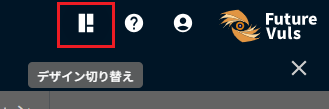
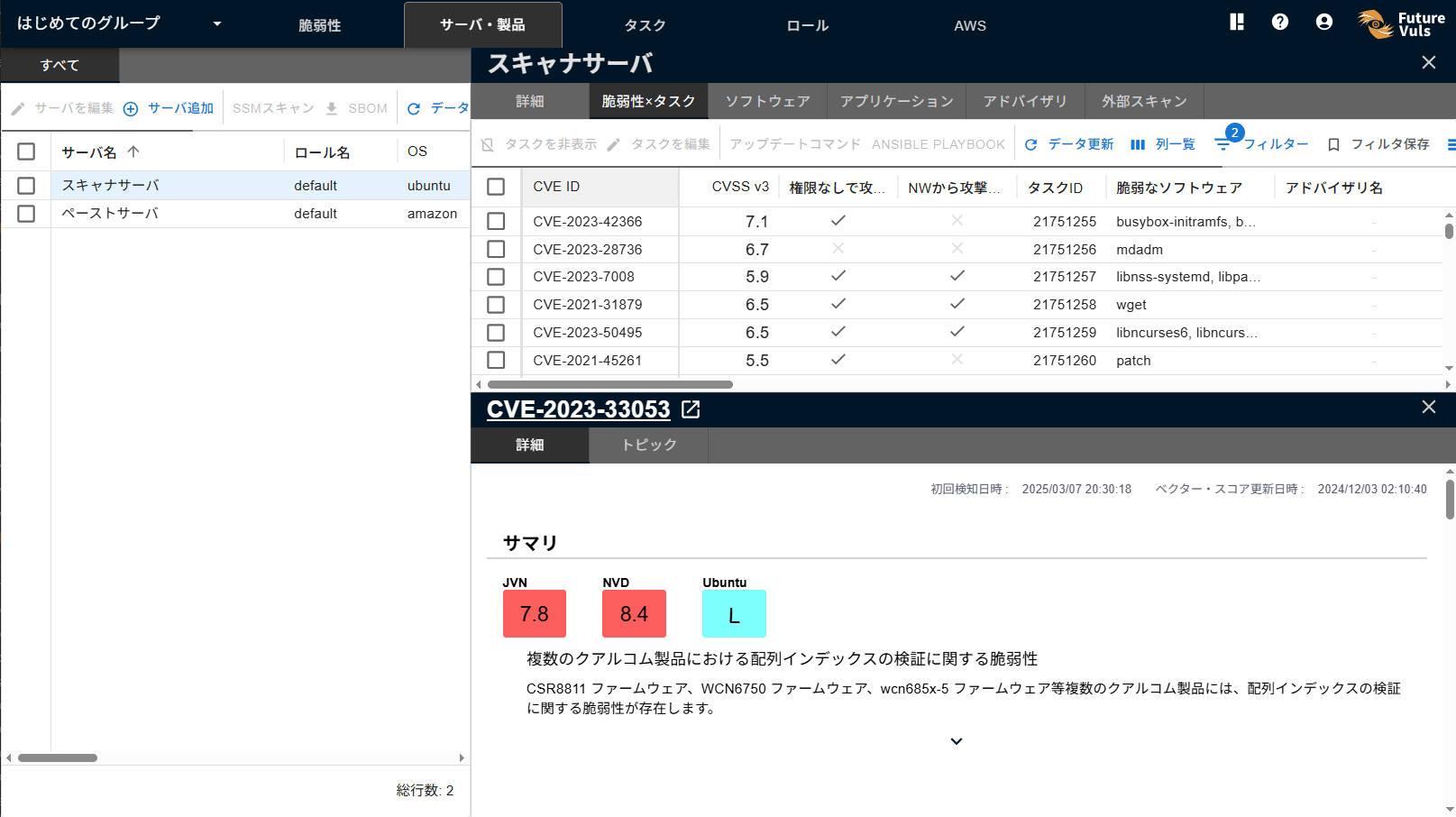
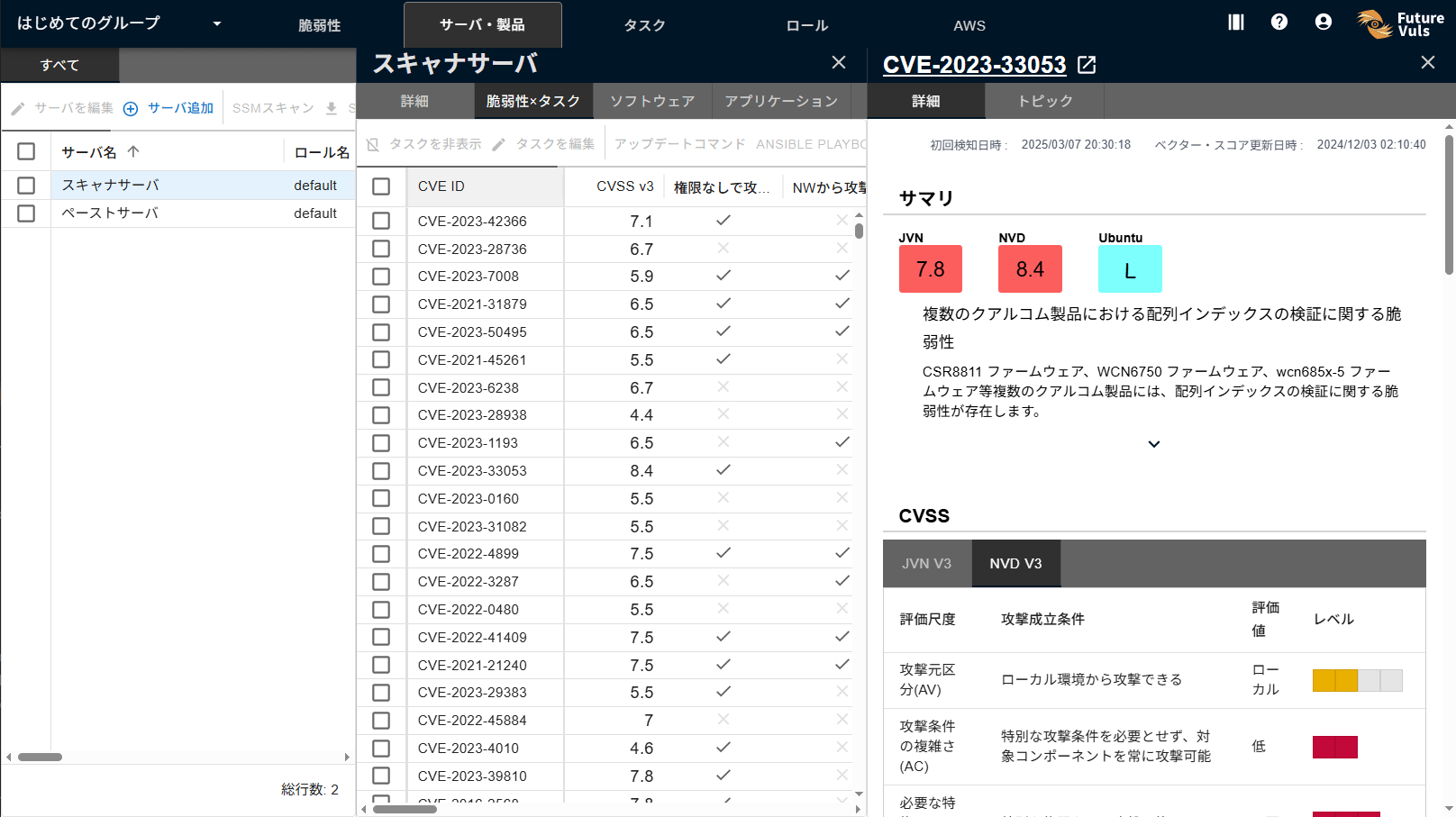
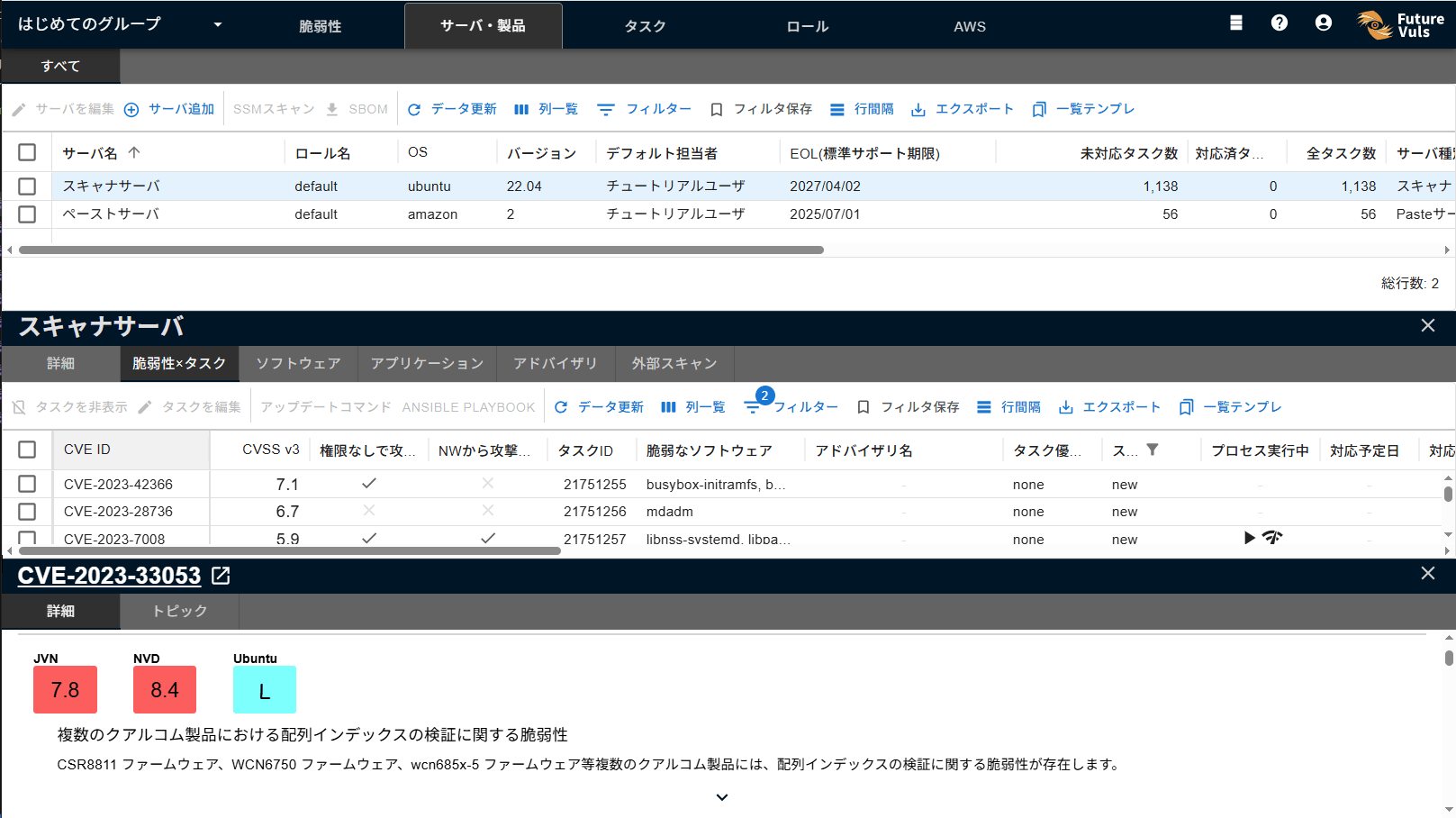
By default, the left half is the first pane, the top right is the second pane, and the bottom right is the third pane. You can switch the pane layout using the "Change Page Design" button in the upper right.
You can display the panes according to your screen's orientation and size. The pane display setting is saved locally, and the same layout will be used when you open it again.
1. Default View#
2. Vertical View#
3. Horizontal View#
Data Table#
List Template Feature
By using the "List Template" feature, you can use a common table format throughout the organization.
Keyboard Operations#
You can select rows using the "↑↓" arrow keys. Pressing the "Enter" key opens the pane for the selected row.
Paginated Display#
The following lists display data page by page instead of loading all rows at once.
- Task list
- Software list
Use the "Go to first page", "Go to previous page", and "Go to next page" buttons to switch pages. Use "Rows per page" at the bottom of the list to choose between 30 and 1,000 rows per page.
Pages with a large total count
You can page through only the first 100,000 rows. To check rows beyond that, narrow down the conditions with a filter. If many rows remain after filtering, the total count is displayed truncated.
Sorting#
Each column can be sorted by clicking on the column header.
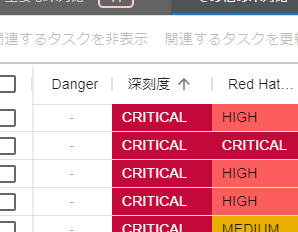
To sort by multiple columns, hold down "Ctrl" while clicking the column headers.
Sorting in paginated lists
In paginated lists, you can sort by only one column. Some columns cannot be sorted.
Filtering#
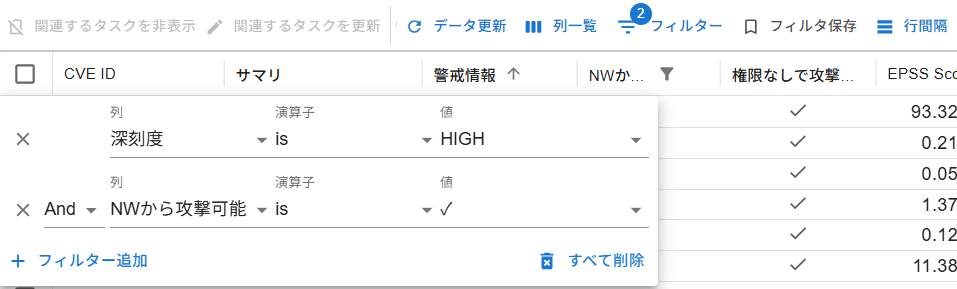
You can apply filters to each table to narrow down the items. When a filter is set, a number will be displayed on the filter icon.
Also, by enabling the "Save Filter" option within the "Settings" button, you can retain the filter conditions for various lists such as vulnerabilities, servers, and tasks, even after navigating away from the page or logging out.
When you select a vulnerability from any section from "Important CVE" through "Deferred CVE" on the Vulnerability tab, the second pane's "Task × Server" tab will have the filter 'Status Until defer' And 'Hidden is false' applied by default.
Filtering in paginated lists
In paginated lists, the available conditions (operators), and whether a column can be filtered, vary by column. For the "Server Name", "Group Name", "Primary Assignee", "Secondary Assignee", and "Last Comment Author" columns, you filter by selecting from the candidates that appear as you type (partial-match filtering is not available). The "Server Name" and "Group Name" columns are sorted by ID, so they are displayed in the "Name (ID: number)" format.
Bulk Operations on All Filtered Rows#
In paginated lists, clicking a bulk operation button displays a menu for choosing the target of the operation.
| Menu | Target |
|---|---|
| Apply to selected rows | Rows selected with the checkboxes |
| Apply to all rows matching the current filter | All rows matching the current filter conditions, including rows on pages that are not displayed |
Note the following about "Apply to all rows matching the current filter".
- You can perform bulk operations on up to 10,000 rows. If the number of matching rows exceeds this limit, the operation cannot be run, so add filter conditions to narrow down the rows
- Rows that match the conditions at the time of execution are updated, so changes made by other users may be overwritten
Column Reordering#
You can change the order of columns by dragging them. The modified column order is saved locally, so it will persist when you reopen the page in the same browser.
Resetting Columns#
FutureVuls does not currently have a UI feature to reset columns. However, you can reset columns using Google Chrome's Developer Tools.
Please follow the steps below to perform the reset.
- Open Google Chrome's Developer Tools with "Ctrl + Shift + I"
- Select the "Application" tab
- Right-click on the value of the key name "GridColOrders", select "Edit Value", and delete the field corresponding to the column group you want to reset
- Refresh the browser
Correspondence between Tab Names and Field Names
The tab names on the FutureVuls screen correspond to the field names used in URLs as follows.
| Tab Name | Field Name |
|---|---|
| CVE | cve |
| Server / Product | server |
| Task | task |
| Role | role |
| AWS | ssm |
| CVE × Task | cveTask |
| Software | pkg |
| Application | applicationLibrary |
| Advisory | advisory |
Showing and Hiding Columns#
You can customize the displayed items by clicking the "Columns" button. By default, only the minimum set of columns needed for making decisions is displayed. From "Columns", you can display additional columns that help with your decisions according to your environment.
The default column layout corresponds to the "Minimum" template of the "List Template" feature. Once you are familiar with the operations, try adding columns from "Columns" or applying a template prepared by your organization from the "List Templates" menu at the top of the list.
When accessing via a link in a notification email
When you access the list via a URL with filter conditions, such as a link in a notification email, the filtered column will be displayed and the filter applied even if that column is not included in the default view.
Refreshing Data#
For lists without pagination, retrieved data is cached locally. The initial data retrieval may take some time, but subsequent tab switches will use the local cache for faster browsing.
This local cache is refreshed with the latest data when the data is updated, when the page is reloaded, or when the data is re-fetched.
The paginated task and software lists retrieve the data needed for the current page and filter conditions. They do not keep all rows locally.
Data can be re-fetched by clicking the "Refresh data" icon.
CSV Download#
List data can be downloaded in CSV format via the "Export" button. The output will maintain the filter and sort settings. If you select rows using the checkboxes, only the selected rows are exported.
CSV export scope for paginated lists
In task and software lists, "Export" exports rows from the current page. It does not export matching rows from all pages. To download all rows in a group, use the task CSV report or the software CSV report. To download all rows in a group set, generate a CSV report for each group. Filters and selections on the screen are not reflected in CSV reports. To obtain all matching rows, filter the downloaded report or specify conditions and retrieve all pages with the FutureVuls API.
Row Spacing#
By clicking the "Settings" button, you can adjust the table row height to one of three levels using the "Density" option. Select the height that works best for you.
Settings Page#
You can navigate to various settings pages from the icon in the upper right corner of the screen.
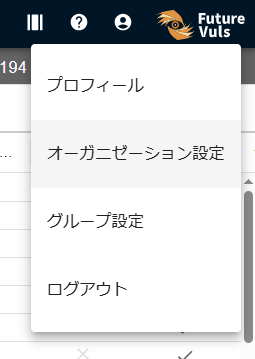
Refer to the following manuals for details on each settings page.
Display Permissions
Settings screens are only visible to users with the appropriate permissions. For more details, refer to the "User Permission Management" manual.
Language Settings#
FutureVuls supports Japanese and English. Languages are configured in two places: the browser language setting and the organization language setting.
Browser Language Settings#
FutureVuls refers to the browser language setting to switch the following languages.
- The display language of the FutureVuls portal
- The language of notification emails for users, such as task updates, task comments, Daily/Weekly Reports, scan notifications, and updates to automatic vulnerability priority settings
Since this is a browser-side setting, each user can choose their own language. If the browser language setting is not Japanese, FutureVuls displays and sends in English. In Japanese, menus are displayed in Japanese and detailed information from JVN is displayed. In English, menus are displayed in English and detailed information from JVN is not displayed.
For how notification emails (including report emails and notifications sent in the organization language) are sent to each recipient, see "Email Notifications".
How to set the display language in Chrome
To set Chrome's display language:
- Enter
chrome://settings/languagesin Chrome's URL bar - To display in Japanese, set "Japanese" as the top language preference. To display in English, set "English" as the top preference.
After you switch the browser language setting and access FutureVuls, FutureVuls sends subsequent notification emails for users in the new language.
Organization Language Settings#
You can change the language of the following notifications with "Organization language" in Organization Settings.
- Notifications forwarded to Notification Email Addresses
- Notifications to Slack and Teams
- User addition and organization paid-plan upgrade notifications
- CSV report generation completion notifications
The following text that FutureVuls records automatically is also recorded in the organization language in effect at the time it is recorded.
- System comments on tasks, supply chain risks, and PSIRT responses (including comments for automatic hiding by triage settings)
- Topics added by automatic vulnerability priority settings
- Reasons for EOL and malicious package supply chain risks
- Errors shown in the AWS SSM command history
- Error messages shown in the scan history (for scans, supply chain risk scans, and SBOM imports), and warnings shown when vulnerabilities cannot be detected from Dependabot alerts in the GitHub integration
Changing the organization language does not change text that has already been recorded. However, the reasons for EOL and malicious package supply chain risks are rewritten at the first scan after you change the organization language (for the exception for some EOLs when you change it to Japanese, see below).
When the organization language is Japanese and no Japanese reason is available for an EOL whose detection method is futurevuls (including when the Japanese reason is identical to the English one), the English reason is shown with the Japanese prefix メンテナ/上流の情報(英語): ("Maintainer/upstream information (English):").
Reason text in this format is created when FutureVuls regenerates the reason text, and the display switches at the first scan after the regeneration (you do not need to change the organization language, and the update timestamp is also updated).
Until the reason text is regenerated, such reasons may be shown in English without the prefix, even after you change the language from English.
Reasons for EOLs whose detection method is not futurevuls are shown as before, without the prefix.
Note that warnings not included in the list above (such as those output by the scanner) are shown in English regardless of the organization language. Also, error messages for supply chain risk scans and SBOM imports, and the GitHub integration warnings, recorded before FutureVuls began recording scan history error messages and such in the organization language may be in Japanese regardless of the organization language (see Scan History).
AI summaries and audit log operation names retrieved through the FutureVuls API or the MCP Server are also returned in the organization language. AI summaries that have not yet been translated into English are returned in Japanese.